I’ve forgotten how to apply makeup.

The pandemic hit at an all time low for me. Jake and I had just found out that we were going to have to go through IVF over the summer and I… wasn’t handling it well.

… more than once, I called in late, because I couldn’t pull it together.

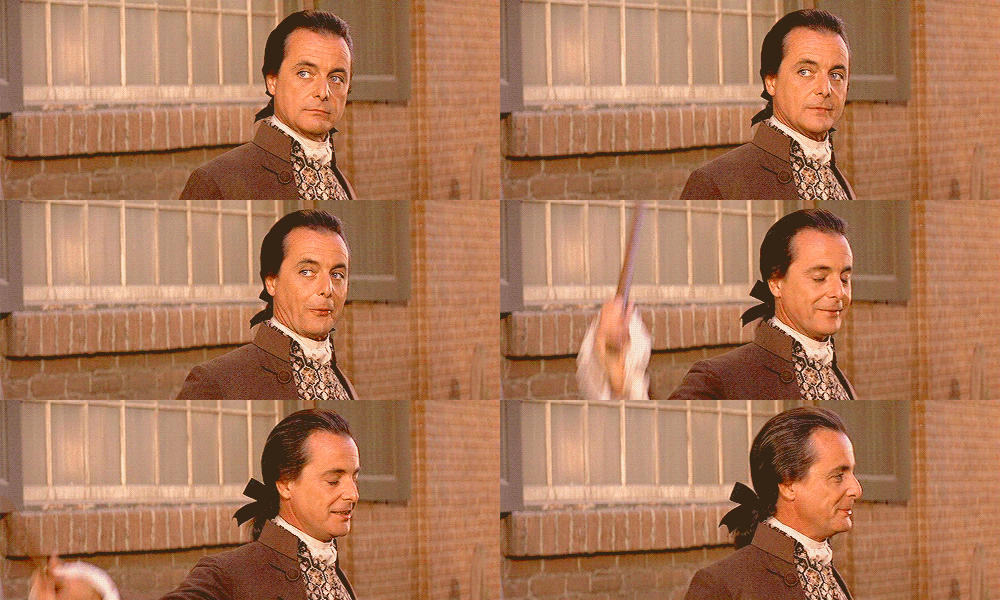
Even during the month before Covid-19 hit my state, the only reason I bothered to dress nicely and do my hair and makeup, was that it made me feel more capable and put together, at a time when I desperately needed it. So, when the library closed for an indeterminate amount of time, my sole goal, in regards to appearance, was to maintain my weight and basic hygiene. During those six weeks, my daily uniform consisted of athletic shorts, tank tops, and ponytails… not even cute, perky ponytails, but the Founding Father kind that’s worn at the base of the neck.

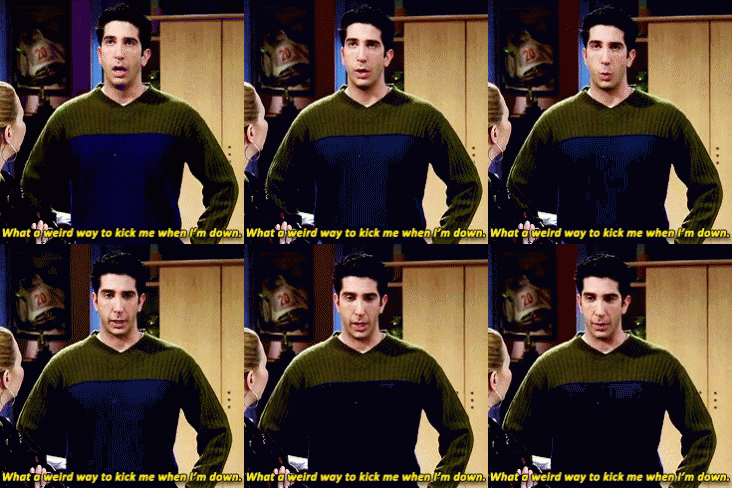
Indeed, I did look like a young Mr. Feeny for most of 2020.

When the library reopened, I felt little motivation to achieve more than the bare minimum summer dress code of denim capris and t-shirts… and a mask. Whereas I might have considered applying concealer and mascara before, I saw no point while revealing barely an inch between bangs and mask. Makeup is expensive and we were about to spend tens of thousands of dollars on fertility treatments. Furthermore, customers weren’t even allowed in the building and Jake was just happy that I could get out of bed in the morning. Who was I trying to impress?

I began my first IVF cycle in July and was far more concerned with taking my temperature thirteen times a day than I was with not wearing Crocs to the doctor’s office. Makeup was literally the furthest thing from my mind, at this point in time, and it sort of became habit. Even a year later, no one can see my face, unless it’s during a Zoom call from home, and that usually means a remote program or staff meeting. My teens don’t give two figs how I look, as long as I entertain them with elaborate D&D battles, and my coworkers see me in all my barefaced glory every day, when I’m allowed to remove my mask at my workstation. When customers are allowed in the building, all they can see is eyes.

Humans, circa 2020

Sure, I apply some concealer, when I look especially exhausted… because it has been an exhausting year, but I never see anyone outside of basic grocery shopping and Amazon returns. Jake and I literally entered a restaurant less than five times last year. Date nights consisted of s’mores in the backyard and Netflix. We didn’t even see our families more than once or twice. Halloween came with an ice storm and record-breaking power outages. I didn’t even get to wear a costume, because a) I had an ultrasound and didn’t want to receive bad news while dressed like Darkwing Duck and b) everyone had hunkered down in preparation for the storm, so the library was even more empty than usual, on a pandemic Saturday. Thanksgiving consisted of sweet potato pancakes and turkey sausage with my grandparents on Black Friday, all of us in jammies. New Year’s was just the two of us at home. Christmas was close family only. We were even snowed in on Valentine’s Day and spent the time painting the babies’ room, sewing quilts, and making stuffed waffles.

Now, here I am, fully vaccinated in a state where anyone who wants one can get their Covid-19 vaccine, able to enter the world again and y’all… I’ve forgotten how to apply makeup.

Not having taught myself to use eyeliner until 23, I’ve always been something of a minimalist, when it comes to makeup, only truly investing in decent products in preparation for my wedding at 29. Before that, all of my makeup was from the drugstore and I was fine with it. I’ll never forget marveling over how Jake could choose me, when I met his friends’ wives, who took two hours to get ready for Wal-Mart, when every bit of Maybelline and Revlon I owned was in my purse.

Even now, I only wear Bare Minerals foundation and eyeshadow, buy my mascara and eyeliner in black or brown at Sephora, and almost never wear lipstick. I have clear skin, easy hair, and I’m cheap. I’ve just never felt the desire to spend the time or money on perfecting tips from YouTube tutorials; and although I married a cowboy, who’s used to women with big hair and glitzy jewelry and bright eyeshadow, fortunately for me, he prefers the low maintenance look, along with the attitude and budget that comes with it.

All that being said, I do like to dress in feminine clothing, despite my inability to tell you any trendy brand names or styles. Years after the cancellation of The New Girl, I still tend toward Jessica Day style dresses, long hair, and bangs… though I do cut them myself. Now that I spend my mornings nursing pregnancy headaches, instead of screaming on the bathroom floor, I once again have the energy to dress up in cheap Amazon maternity dresses and accessorize with the jewelry I’ve accumulated over the last 15 years. I even straighten my hair, the one style technique I’ve mastered… before donning my mask.

Now, here we are, able to see our vaccinated friends and family once again, sans masks, according to CDC guidelines. In fact, this weekend, Jake and I are visiting the family ranch for the first time, since we begged for money for fertility treatments last March. I look like a tabloid snapshot of myself! This ranch is located in the land of big hair, turquoise, and people who haven’t been wearing masks for the last year, and I don’t even know how to look human anymore.

I must admit that, after all the ways that Covid-19 has kicked our collective butts, this threw me for a loop. I’ve been alternately praying for normalcy and breaking down because we’ll never see it again, so it never occurred to me how awkward readjusting to it would be, when Earth began to reopen. I have to say, though, it’s a good problem to have and maybe it means there’s an end in sight, if we can start to worry about dressing appropriately and forgetting how to wear makeup.

Why We Don’t All Just Adopt

Ever since Jake and I began our infertility journey, I’ve realized that the world is full of people who can have healthy children for free, and usually don’t want them at all, telling other people that they should just adopt. I can’t actually speak for all couples who’ve sought fertility treatment, on this or any other issue of course, but I can share a few facts and explanations for why this “solution” isn’t as simple as people seem to think. I can also do so with a clear head and little emotional charge, which you’ll be fortunate to get if you actually suggest this to someone struggling to get pregnant. Spoiler alert: don’t.

To be clear, I am not telling anyone not to adopt. Adoption has proven to be a wonderful option for many, despite its challenges. It’s also just not a feasible option for many others, who are rarely given the opportunity to articulate why… or are too hurt to do so, because “Why don’t you just adopt” is a really hateful thing to say to someone dealing with infertility. I’m not the first one to discuss this and here is an article from Psychology Today that makes many similar points, if you don’t think I’m qualified to outline the reasons I found that adoption wasn’t a realistic option for so many people.

Adoption from Foster Care
When Jake and I found out that IVF was our only option to conceive, we did consider other possibilities, not just because IVF is unimaginably expensive and invasive, but also because it’s not guaranteed to work and we wanted children, even if they weren’t biologically ours. I started by researching adoption from foster care, assuming that these children would need homes the most and knowing that the process was low cost to free, when compared with other options. I quickly found out, however, that my home state is surprisingly honest about how difficult this process really is, how long it can take, the children available and the challenges they face. Adoptuskids.org spells out some of the same information, highlighting the fact that all of the children in foster care have dealt with loss or trauma and have the emotional issues that come with it, are an average of eight-years-old, often come in sibling groups, and may have special needs. Some resources even advised not entering a foster situation if your hope was to adopt in response to infertility, because the primary goal of foster care is reunification. Children aren’t usually placed in foster homes to find new families, but for their birth parents to have a chance to improve their situation and, ideally, take their children home once again. So the people who are most often asked “Why don’t you just adopt?” are actually being told that adopting from foster care really isn’t for them. This is the perfect version, as advertised on foster care websites, depicting pictures of cute, healthy, white toddlers on their adoption day, with no horror stories included.

As with IVF, however, you can’t mention the words “foster care” without hearing or recalling someone’s horror story and in the last year, I’ve heard several of them. I won’t spell out the firsthand accounts I’ve received, not just because they aren’t my stories to tell, but because you can ask around to find plenty of your own if you wish and every experience is unique. I also have no desire to paint DHS or the foster system as being run by mustache-twirling villains. It’s an underfunded and understaffed government agency without a lot of people waiting in line to become case workers or foster to adopt… often because of these stories, creating a vicious cycle full of people who are doing their best. The abbreviated version is that it just doesn’t always work out and when it doesn’t, it’s devastating. I know there are foster care success stories and I’m happy for the ones who can share them, but clearly this is not an option for everyone (and is arguably a poor option for some) and there is no shame in that. I’d imagine that those who have adopted from foster care know the challenges and aren’t asking people why they don’t “just” do so, themselves. It takes a special person to foster or foster to adopt (not the same thing) and it’s okay that that doesn’t describe everyone who wants to be a parent, as well as those who don’t want to be parents.

Tribal Adoption
In my state, you can flip a coin as to whether or not someone will claim to be native to one tribe or another. My own mother was adopted before the Indian Tribal Welfare Act, which I personally support as an effort to maintain children’s tribal roots, in part because I can’t actually claim mine, due to how my mother was adopted in 1960. I’ve heard many similar stories from those who don’t have their official cards and know just as many who do, so tribal adoption, around these parts, is a popular option. In fact, a good friend and coworker just finalized the adoption of her little girl from a tribe native to my state. She’s a registered member, herself, so it wasn’t fraught with the risk so inherent in trying to adopt outside of the tribe. I’m sure you’ve heard of these court battles and the arguments for why ICW should be abolished, but if you haven’t, it’s a very charged topic around these parts and one I can’t discuss dispassionately, so I won’t try.

The short story is that tribal adoption is an option worthy of consideration, if you’re a member. Results and processes vary by tribe, but it is often a simpler and quicker process. Even then, however, it’s not without risk, as there are still many hoops to jump through, before finalizing and you could inevitably lose custody before that point, as with any adoption process. My friend has actually decided not to adopt another child, specifically because she feels so lucky not to have had her heart broken the first time, after multiple failed infertility treatments. If you’re outside the tribe, you’re generally warned to steer clear of this option, as there are so many more ways it can fall through, in favor of a member, whether you agree with the policy or not.

Private Adoption
Private adoption is what most people picture when they hear the word “adoption.” They think of a pregnant teenager or young woman who’s unable to care for an infant and seeking a loving family, as seen on their favorite sitcom. Private adoption was used as a plot device on Friends, Sex and the City, and Modern Family… because that’s what infertility is to media, a plot device. The problem with these depictions, of course, is that they grossly misrepresent the process, from the waiting to the financial aspect to the risk of the adoption falling through.

Let’s start with the waiting. According to this source, the wait is between two and seven years for a healthy infant. It’s very difficult to find other figures, as those reporting them are the agencies looking to make money off of their services. Each step in the process is discussed independently and time estimates are rarely given, in part, because every situation is so unique. The reality of private adoption is that there are many more waiting parents than there are available children and it is very difficult to pin down a timeline. If it doesn’t work out, you’re that much older when you have to seek other options.

Then, there are the failures. It’s difficult to say how common failed adoption matches are, because no one is keeping track. One attorney estimates, however, that at least 50% of adoption matches fail, with scams to get money (while planning to keep the child) being difficult to prove, but not uncommon. He goes on to say that he feels that it’s become more and more common for adoption matches to fail, while more of the financial burden now falls on the adoptive parents, not the agency, estimating that number to fall somewhere between $6,000 and $10,000. Creating a Family displays surprising transparency, publicly reporting that their success rates range anywhere from 60% to 93%, depending on the year. This, of course, means that anywhere from 7% to 40% of matches fail.

This horror story is a terrible fertility clinic waiting room read and shares the tale of what one couple went through for their ultimate successful private adoption. Most people know, even through the grapevine, the story of a birth mother who changed her mind, either through the birth mother herself, as is the case with my step-brother’s nephew, who once had eager adoptive parents waiting for him… or through the heartbroken adoptive parents, such as with a high school teacher of mine. I’ve even heard the miserable recounts of a close friend who once worked with an adoption agency and had to assist in reclaiming adoptive children from their new homes. These women aren’t the villains, however, for deciding to parent their own children. It’s just a risk of a very difficult process, so it’s no surprise that said process is no one’s first choice.

Finally, the expense of private adoption must be considered. There are testimonials all over the Internet, in blogs or message board comments, sharing individual experiences, but I can’t validate those numbers, so I’m going to quote some average figures, such as adoption.org’s $30,500 to $48,500 for an agency adoption and $25,000 to $38,000 for independent adoption. American Adoptions, however, reports a higher figure, with a national average of $43,000 and their own averages of $40,000 to $50,000. Some estimates cite costs as low as $20,000. There are of course some very happy families built through private adoption, but the fact remains that, even when considering only the financial aspect, it’s simply unreachable for many Americans.

International Adoption
International adoption is actually not a favorite suggestion of those who lack an understanding of how involved all types of adoption are, often getting the response that there are “plenty of children here who need homes.” See above. For years, however, it was a go-to for people who wanted to avoid the complications of these other options, while still having the opportunity to become parents. It was often cheaper and came with less risk of having a birth parent attempt to reclaim parental rights. I remember looking at international adoption, more than 10 years ago, and seeing that adopting from Ethiopia only cost around $15,000 and was one of the cheapest and easiest options.

The landscape of international adoption has changed drastically since I last considered it, something I also discovered while researching in a fertility clinic waiting room. Today, all of the countries that were once so popular for international adoption (and still allow it) limit their available children to those with disabilities, sometimes mild and others severe; while only allowing the rest to be adopted locally, by their own citizens, who will raise them in their native countries and cultures. There’s merit to these policies, but they severely limit the options and it now costs much more for international adoptions.

Previously, in Ethiopia, only abandoned children were available for adoption internationally, which meant they often had severe disabilities. The cost was around $32,000 – $45,000. In 2018, however, the country ended international adoptions, as did Russia in 2012. Adoption from China costs anywhere from $27,000 to $37,000 and limits their available children to “special needs” and “special focus,” respectively children with one or more medical conditions. Only single women (as opposed to single men) are allowed to adopt, and must have a net worth of $100,000 or more, while married couples only require $80,000. Applicants’ BMI cannot exceed 40. Guatemala specifically limits their prospective parents to heterosexuals and discourages any single man from adopting. The estimated cost is $25,000 to $38,000. This is irrelevant, at the moment, because the U.S. doesn’t currently allow adoptions from Guatemala, Vietnam, or Nepal. Other, more obscure countries, often have trouble meeting U.S. immigration regulations, regardless of their available and waiting children.

In the past, some beautiful families have grown through international adoption. As you can see, however. this is no longer really an option for most Americans, considering the cost, limitations, and even immigration horror stories.

Our Reasons
That’s it, y’all. Those are all of the options for acquiring a child, without fertility treatments, short of a relative dying and leaving you one in the opening plot to a family friendly romcom. Jake and I discussed all of the above options, before moving forward with IVF and what it came down to, for us, was that we wanted the absolute assurance that the child we were raising would remain ours. We didn’t care about the genetics or appearance so much as we cared about knowing they couldn’t be taken from us. We also found that even one of the most expensive fertility treatments was still cheaper than most forms of adoption.

IVF and other similar options are not without risk, believe me I know. You can spend thousands of dollars on a failed procedure, as Jake and I personally experienced, or six figures on multiple failed procedures, which we fortunately did not. It’s emotionally, financially, and physically devastating, but of all the risks, from bankruptcy to cancer, having your child ripped from your arms isn’t one of them. For most couples undergoing fertility treatments, it’s not an obsession with pregnancy or having a child that looks like them or an inability to love a kid who doesn’t share their bloodline… you know, the things people who often don’t want any children (and therefore don’t want to adopt either) accuse us of thinking. They just want to be parents, without threat of having the title stripped from them, often after heartbreaking years of trying to conceive naturally.

If it came down to (a) spending tens of thousands of dollars on invasive medical treatments or (b) walking into the Baby Pound that my Gramma adopted my mom from (which people seem to think still exists today) and taking one home with the assurance that no one would ever show up to reclaim them, many people who want to be parents would choose the latter. It’s not 1960, though. I’m pretty sure the hospital administrator in charge of my mother’s adoption wasn’t even entirely on the up-and-up and my Gramma still feared for her family every time the doorbell rang, until her daughter was eighteen. So, it wasn’t even all that simple then.

Sure, most of us do want babies, because we’re complete monsters for wanting to be there for all of the firsts and know that our children weren’t traumatized, before coming under our care. If we could adopt healthy toddlers or young grade schoolers, though, even having to help them overcome some trauma, knowing they’d remain ours, many of us would! That’s just not really how the system works. As for teens, they’re totally my jam, from the nerdy, funny ones to the angry ones smoking pot on the library patio and calling me a bitch. Still, I know that it takes a special person to work with them for even the amount of time I do and I don’t begrudge someone for not being able to do it day in and day out, with any age child.

Adoption has created many happy families, but it’s not without challenges. Not wanting to take those on, as Plan A, after receiving the heart wrenching news that they can’t get pregnant, doesn’t make anyone a bad person. Not wanting to fight these battles, if there’s an easier way, is really no different than not wanting to fight the battles of having children at all, which is also a perfectly acceptable life decision. Quite frankly, unless you’ve adopted several children of your own, you should probably keep your opinions on the subject to yourself, because anyone who has likely knows that it’s just not that simple.
Thirty Thousand Dollars Worth of Babies

It’s the big reveal, y’all, the reason 2020 was so painfully wretched for Jake and me: two rounds of pandemic IVF.

Jake and I stopped trying to avoid pregnancy in December of 2018, when I had my IUD removed. We’d purchased our own home, were doing well in our respective careers, with Jake anticipating a promotion soon, and were well on our way to having our finances under control. I was 31 and Jake was 34, with our two year wedding anniversary coming up in May. Considering the average time to get pregnant is three to six months, we were right on track with the plan we’d outlined before we got married, the plan my OBGYN had approved, the plan that would allow us to have up to four children before we turned forty, if we so chose. Most importantly, I finally felt like an adult who could consistently care for herself and could realistically consider the possibility of caring for another human.
… more or less…

It wasn’t until April or so that we decided to begin trying in earnest, not having been too disappointed about having a few extra months of childfree existence as we waited to see what happened. We felt we were ready (or as ready as anyone can be) for our lives to become about children and family and all the craziness and exhaustion that entailed, so we began timing things in hopes of a more deliberate pregnancy. By June, I’d bought some dollar store ovulation tests, not wanting to waste the money on a giant box of strips from Amazon, when surely things would happen naturally soon enough. It was September, the month of my birthday, when I began to truly worry and asked Jake to get tested, even if we had to pay out of pocket. My doctors had all reassured me that there was likely nothing wrong, based on bloodwork and annual exams, and that it was just a matter of time… as long as there was nothing wrong with Jake. I’d been encouraged to just “stop trying” and that it would happen when I “least expect it,” advice I still find moronic for a woman in her 30’s. I thought I’d heard the last of that terrible adage while dating.

No. I wanted real answers, even if those answers were that I just needed to be patient, backed up by medical proof. So, off Jake went to our family doctor, with strict instructions from me to tell him that we’d been trying for over a year, despite it having been just shy. You see, for some reason, doctors are still insisting on the stipulation that a couple must be trying for at least a year to get tested for infertility issues, despite the rising instances of infertility and increased possibility of difficulties in one’s thirties, coupled with the more rapidly dropping chances of achieving a successful pregnancy, once they do figure out something is wrong. Regardless, the doctor scoffed and insisted that there was no need to test Jake, although he was ready and willing to pay out of pocket because “90% of the time, it’s the woman.”

That’s not even the statistic! The correct numbers cite that men are the sole cause of infertility in 20%-30% of all cases and a contributing factor in 50%. Not only that, but testing a man for infertility is far simpler and less invasive than testing a woman. We were willing to private pay for something as simple as Jake having an awkward moment in a clinical room and the doctor scoffed and blamed me, without any evidence to back it up!

By October, I was crying hysterical tears, certain that something was wrong. I begged Jake to see another doctor and he scheduled a seminalis for January. The holidays were a little bittersweet, as I watched other people’s children enjoy the magic, wondering if I’d always be on the outside of that scene. I tried to keep my spirits up, telling myself that everything was fine, but the day before Valentine’s Day, Jake came home to tell me that he had around 1.5 million sperm… and that 40 million was average. Our only hope of having children was IVF, my literal worst fear since I came to understand what it entailed in my teens. We didn’t know if Jake was the only factor or if IVF would even work, just that the average couple spends just shy of $20,000 per cycle and they’re advised to plan for three cycles, for the greatest odds of success. You can bet I called the office and got us a new doctor.

I won’t get too statistics heavy on you, but the summary of IVF research is that there just are no guarantees. Each cycle has a 20% – 30% success rate, overall, and that varies based on the type of infertility, the age and health of the woman and even the man, and the clinic. There are online calculators that will tell you your overall chances, but they’re hardly conclusive and backup the idea that a couple should plan for three cycles for the best chances. My stats were quoted as having a 56% chance of success after the first cycle, 75% on the second, and 85% on the third. Some research suggests moving on after three cycles, as the odds begin to decrease, while others suggest pursuing up to six. Some recommend transferring two embryos, while others warn against it. What it comes down to, however, is that there are really too many individual factors to provide anyone with accurate predictions. Every couple going into IVF is looking at a gamble of tens of thousands of dollars.

This was, of course, a devastating blow. Jake and I had just gotten to a good financial place in life and had no idea how we’d fund potentially multiple rounds of IVF. We couldn’t fathom a life without children and, honestly, it wasn’t until that moment that I realized how very much I wanted them. I thought about the Easter and Halloweens, Christmases and birthdays we’d miss, the sleepless nights and tantrums we wouldn’t have, the first steps and first words, that first painful “I hate you”, the sports games I wouldn’t get to pretend to enjoy, those insufferable holiday pageants and “graduations” from the first half of second grade, the first broken arm and the first broken heart, the first wedding and grandchild… all of the bad and all of the good. I remembered that awful party in 2019, when all of Jake’s friends’ wives acted as though I were invisible the second they realized I didn’t have children. I pictured a lifetime of being excluded for something I couldn’t control.. and then Covid-19 hit.

They say that God never gives you more than you can handle… and I’ve linked the blog I kept during my infertility treatments to testify to that not being entirely true, as I received the news that all elective procedures had been suspended for an indeterminate amount of time, just a month after receiving our heartbreaking news. Then we found out that the financing company our clinic used had gone under, dealt with family disapproval of borrowing funds, and discovered that when we could move forward, we’d have to sign papers agreeing that one instance of fever or a directive from the CDC could forfeit the entire cycle with no refunds, because we weren’t just dealing with IVF, but Pandemic IVF.

I survived 2020, but it was in much the way I survived my early 20s. I am not stronger for it and I can’t even say I pulled myself through it, this time. Nope. Jake was the string to my kite, y’all. He is the only thing that got me through the breakdowns, the days of lying in bed staring at the wall, the shots and the horrible symptoms that came with them, the mood swings and outbursts, either stress or medication induced, I’ll never know. I was legitimately concerned I might have bipolar disorder after I got so angry at Jake for touching my donut, that I hurled a plate across the room, into the sink, went to the bedroom and completely broke down. That will chip a Corelle dinner plate, by the way.

… and everyone else gets to have kids the fun and free way.

It was not an easy year, especially after that first negative pregnancy test indicated an entirely failed cycle, having transferred two embryos with none left to freeze, after spending $16,000. Always having been the “go hard or go home” type, I told Jake that since I was turning 33 in a few weeks, I wanted to pursue another cycle… right now. So I found myself finishing one IVF cycle in August and starting a new one in October. This time, we’d told no one. It was during an historic ice storm that wiped out power across the state, that I sat at home praying we’d keep ours, with over $1000 worth of medication in the refrigerator, funded through a combination of credit card debt and liquidated investments. If we had to stay with family, we’d have to share that we were trying again and open the door to their hopeful expectations, once more. It was awful enough breaking the news to them the first time, while coping with it ourselves.

I spent election day in surgery, alone due to Covid-19. After our initial telehealth consult, I’d had every single appointment alone, in fact, with Jake often waiting in the car. I was by myself for the first egg retrieval and now the second, finally breaking down post-op and crying that I wanted Jake and I was never going to be a mom. Of the many low points in 2020, that could have been the lowest. It was miserable and going home to listen to my clueless Gramma rant about Russia taking over, while high on hydrocodone, didn’t help.

I’d once again transferred two embryos, with Jake in the car, but was able to freeze six this time. I prayed and cried through the pain of ovaries expanded to the size of clementines, still taking an intramuscular shot of progesterone in the hip every night, along with all of the symptoms that came with it, such as fatigue and shortness of breath (while wearing a mask), crippling headaches, and the spasms of pain from nerve damage that persist today, knowing it could all be for nothing again. For the first eight days, I took a prescription to keep me from getting OHSS, an even more painful and potentially life threatening condition that develops when the body over responds. It caused such severe dizziness that I couldn’t drive or work.

In many ways, 2020 was the most difficult year of my life and back-to-back rounds of pandemic IVF was the hardest thing I’ve ever been through… except that it worked the second time. That’s right, tomorrow I am 21 weeks pregnant with not one, but two babies, approximately $30,000 worth, due in July. I haven’t shared, because I was waiting for my 20 week anatomy scan, for fear of jinxing it, but all is well. I blogged a lot more than it seemed last year and for anyone suffering from similar struggles, I’ve linked Belle of Infertility. I can’t claim it’s always uplifting or that I always intended for it to be read, but thus far, it does have an HEA: twin girls!

One year ago today, I received the email that the library was closing its doors and all fertility treatments would be halted, for an indeterminate amount of time. Today I am fully vaccinated and tomorrow, 21 weeks pregnant with twins! For the purposes of this blog, their pseudonyms will be Violet and Scarlett, two names we strongly considered and ultimately vetoed for the color theme and the inevitable shortening to Vi and Scar.

Hey, Jude

2021 has not been a difficult year, comparatively, for Jake and me. In just the first two months, we’ve received a few financial windfalls, bought a new car (with far less friction than The Great Car Fight of 2019), and have both received our first Covid-19 vaccinations. We can have lives again, y’all!

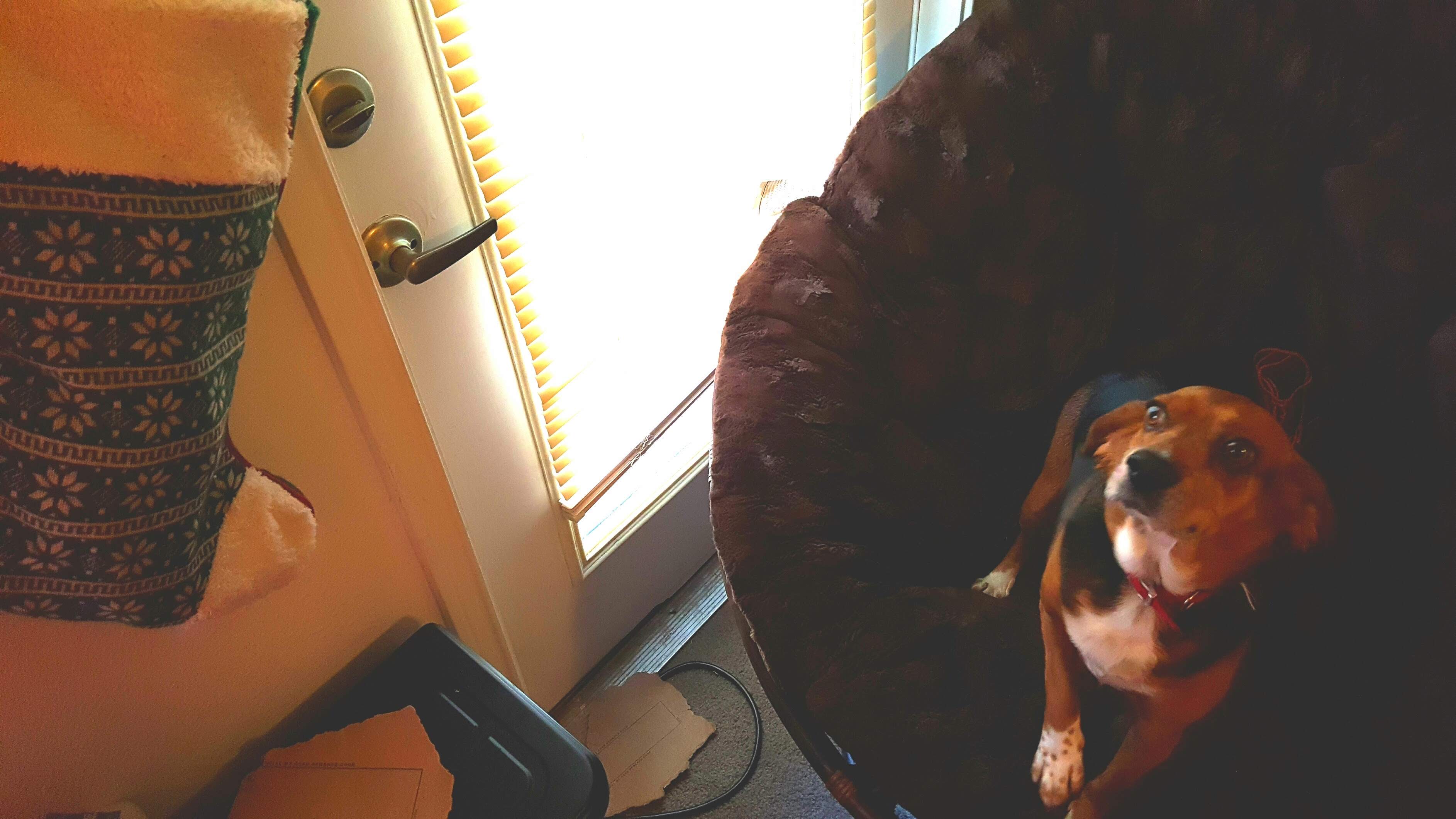
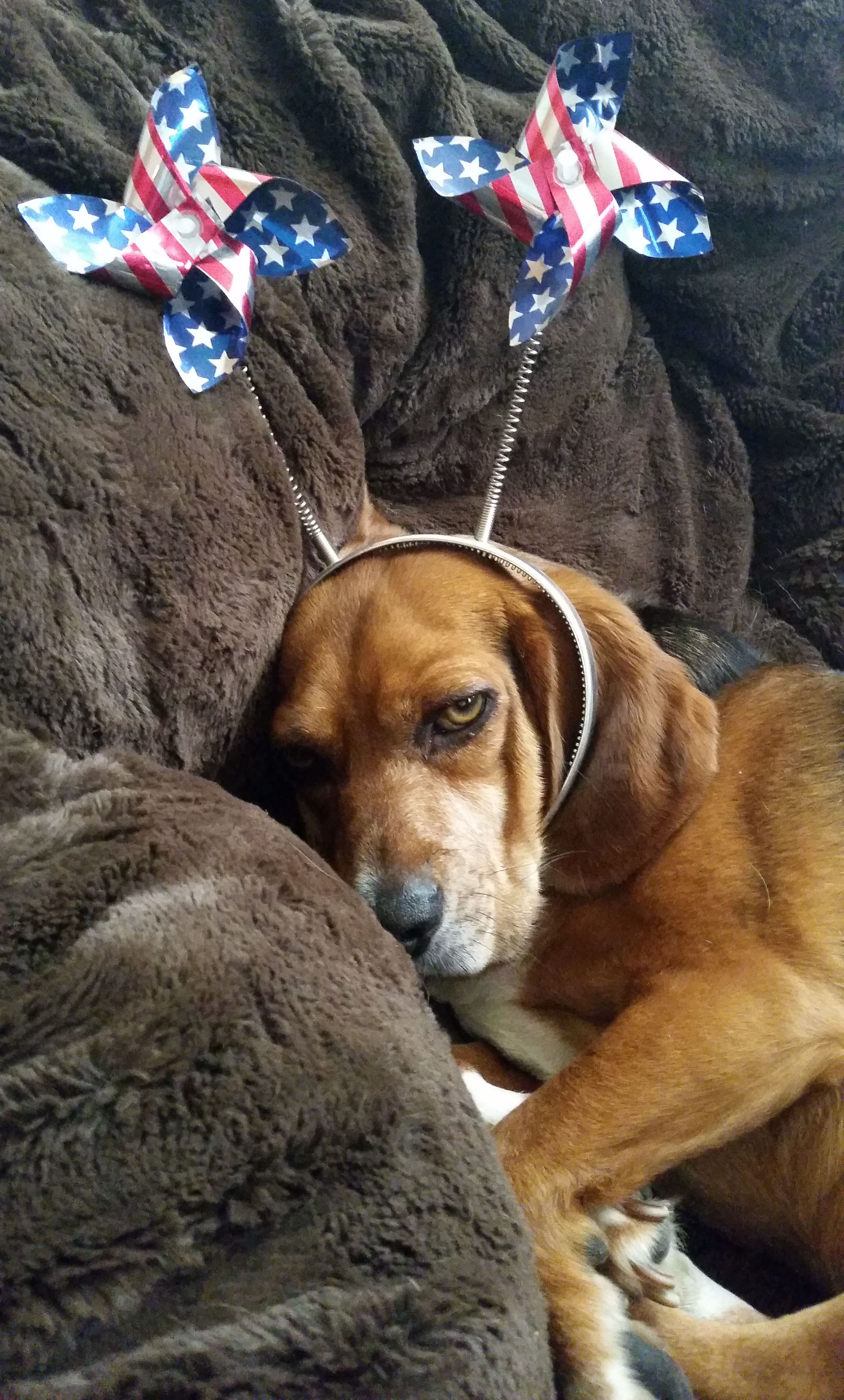
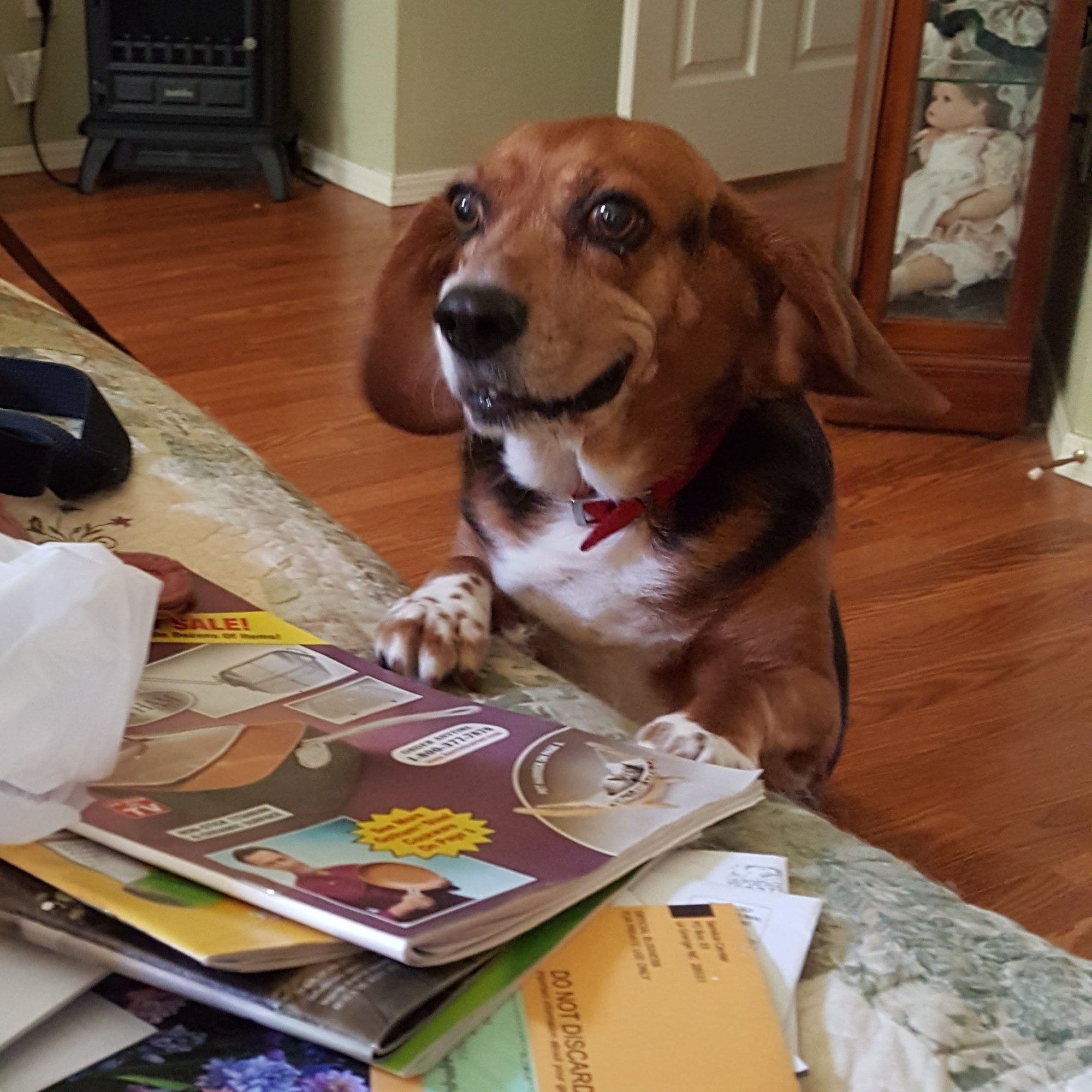
Now that I’ve given credit where credit it is due, I can share how, just eight days into the new year, I experienced one devastatingly unavoidable tragedy. I had to say goodbye to what was once the only boy I’d ever need: my thirteen-year-old beagle, Jude.

I got Jude on Christmas Eve of 2007, just months after my ex burned down my house and killed all of my pets. I was 20 and Jude was six weeks old. At the time, I had a yard and high hopes that my life was headed in a stable direction.

Of course, that’s not how it all panned out. The next few years held seven more moves (because that’s what happens when your ex lies about paying the rent), a miscarriage, the death of a child, literally countless bottles of Everclear, my graduation from college to an empty job market, entry into graduate school, and ultimately a divorce during my first semester, (between jobs substitute teaching and cleaning rec equipment at a community center for minimum wage). These were not good years and, as I’ve written in detail, Jude was not unaffected. My ex was psychotic and abusive and, with me at school and work during his refusal to attend either, my poor Jude bore the brunt of his cruelty.

When Jude and I emerged from the rubble that was my early twenties, we were both worse for the wear. I’ve shared my own trauma, but Jude showed all the signs of a dog abused. Despite my busy schedule not really changing, he developed horrible separation anxiety. I’d leave in the morning and he’d howl at the window as I drove away. When I came home, he’d still be in the same spot, waiting for me. I hope he didn’t spend all day staring, but instead recognized the sound of my car, but I guess I’ll never know. As I’ve admitted in the post linked above, I had no business getting a dog at the time in my life I got Jude… but there we were and rehoming him would have been equally cruel, if not more so.

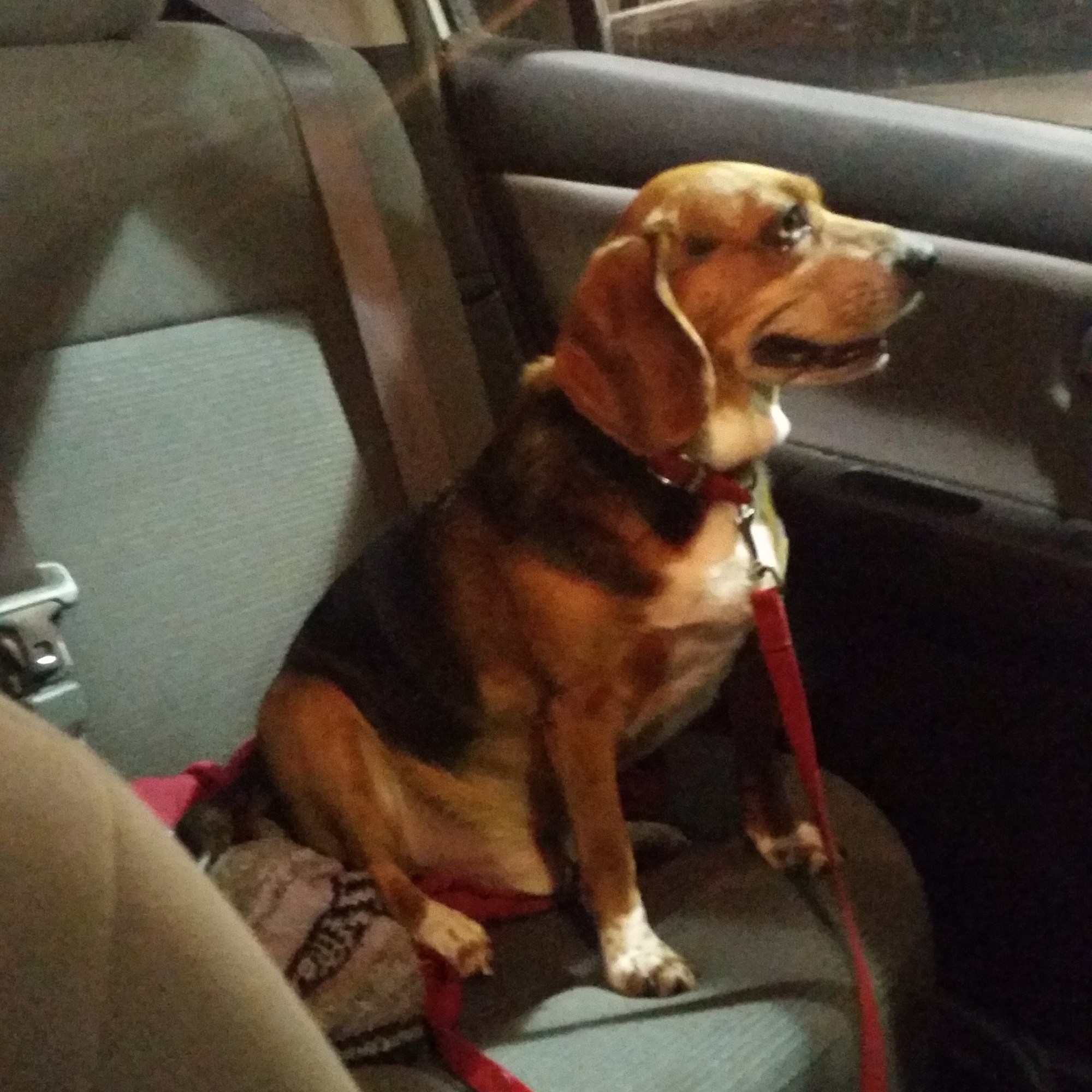
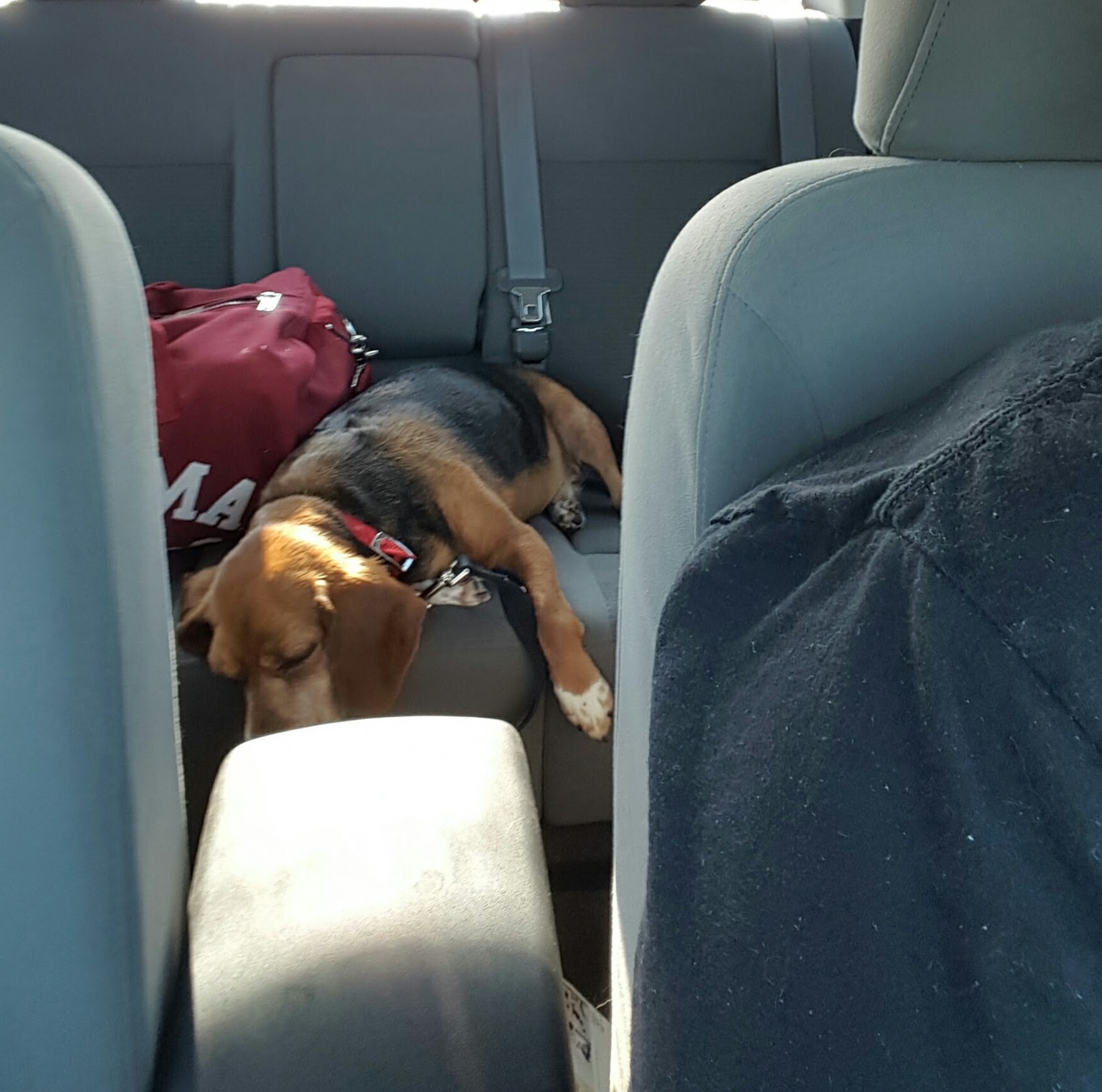
For years, Jude was petrified of men. I’d invite my guy friends over to my apartment and find myself forced to crate the normally sweet and docile beagle, for fear his aggressive barking would turn to biting. My time was limited, working two jobs and going to graduate school, but I ended every night with Jude by my side, often into the wee hours of the morning, as I did my homework. He slept in my bedroom, preferring the blankets on the floor to my incredibly uncomfortable $300 twenty-somethings mattress, but I called him up every morning to snuggle, before I went to work. I took him on late night car rides and fed him people food, to his detriment, surely. He played in my Gramma’s yard whenever we had the time and camped out in the bathtub with me during tornado scares. I used to say that I wish I trusted anyone as much as that dog trusted me. He even let me bathe him, despite the terror of bath time ingrained by my ex, as long as I sang him through it.

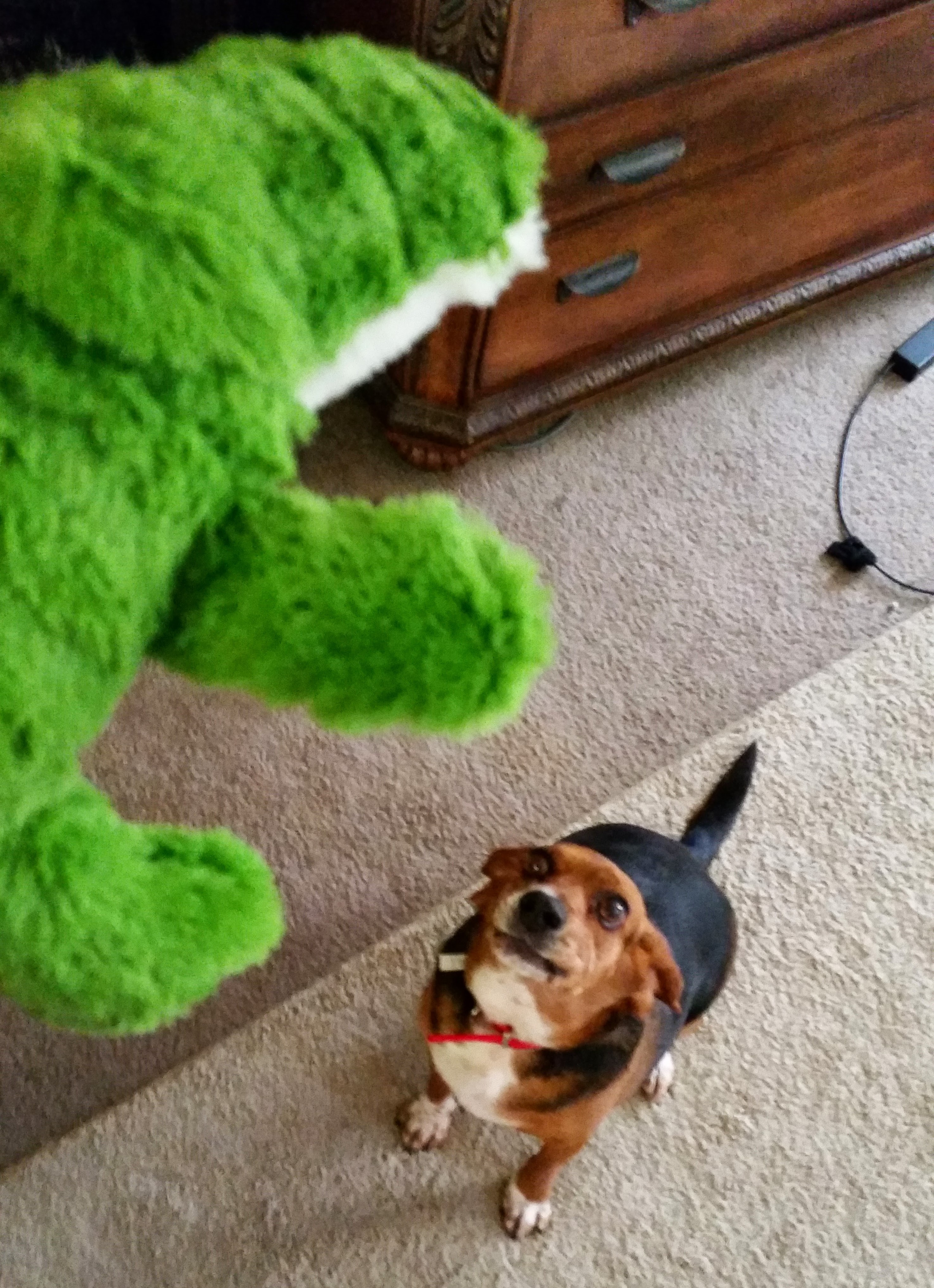
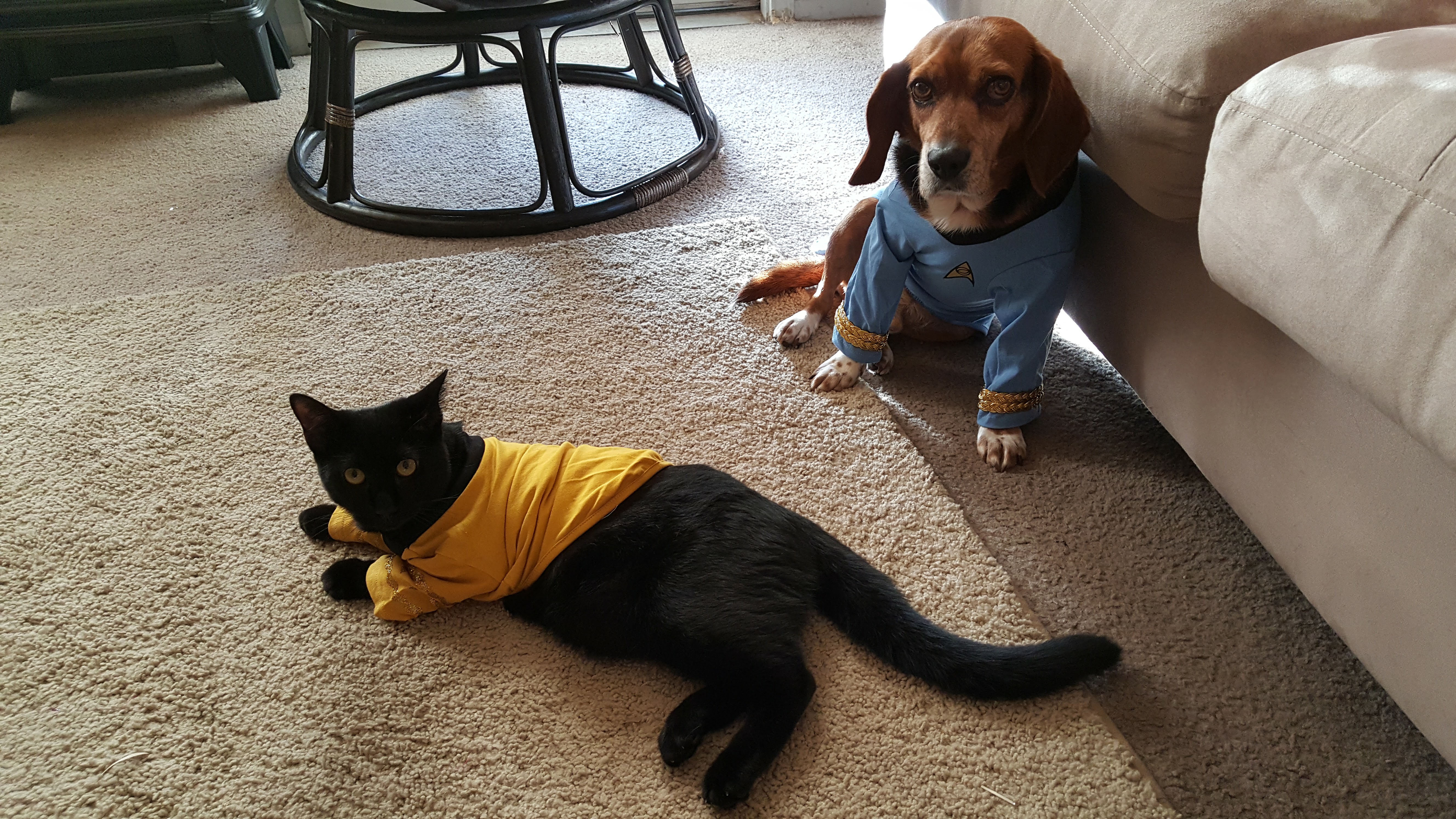
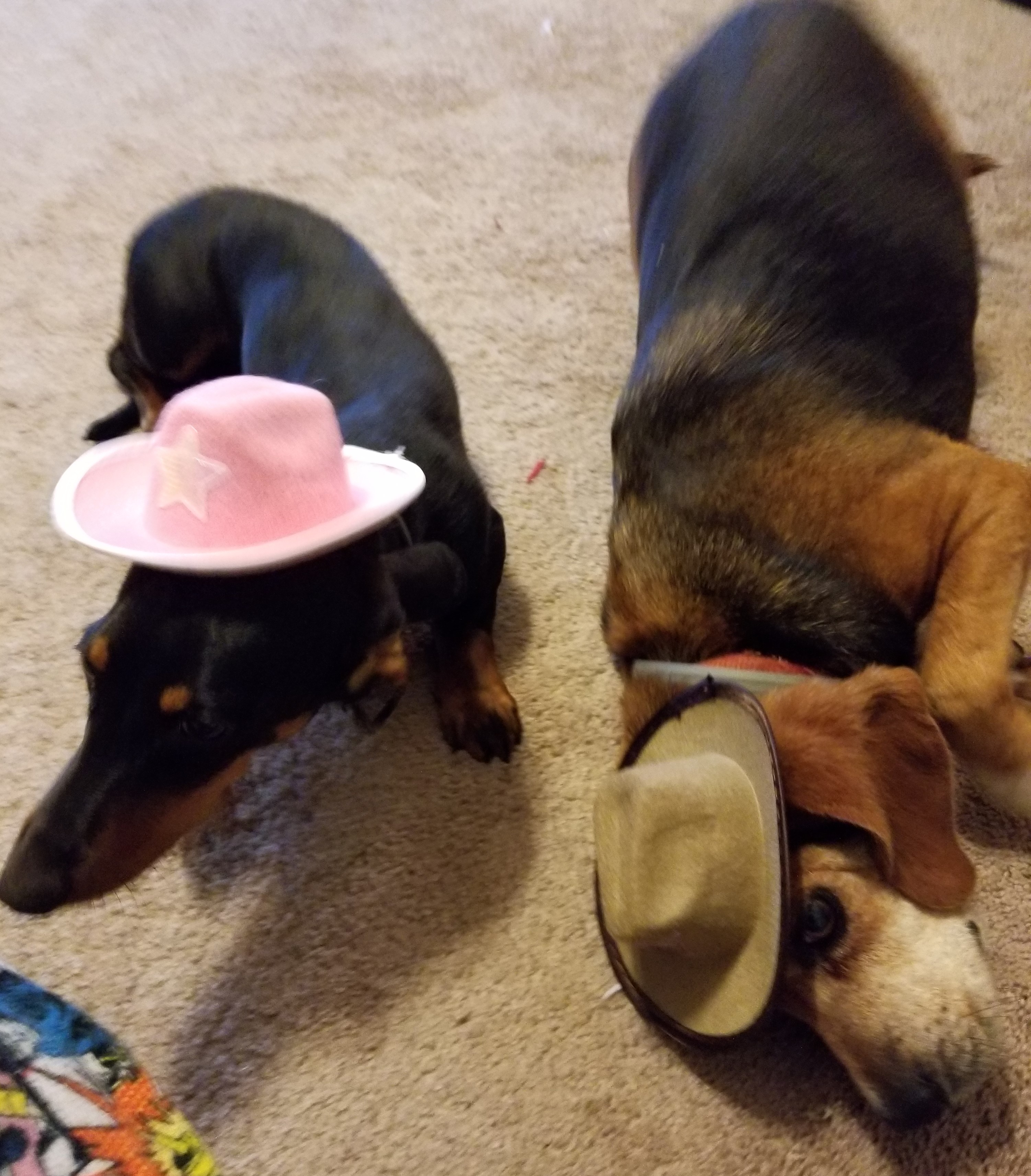
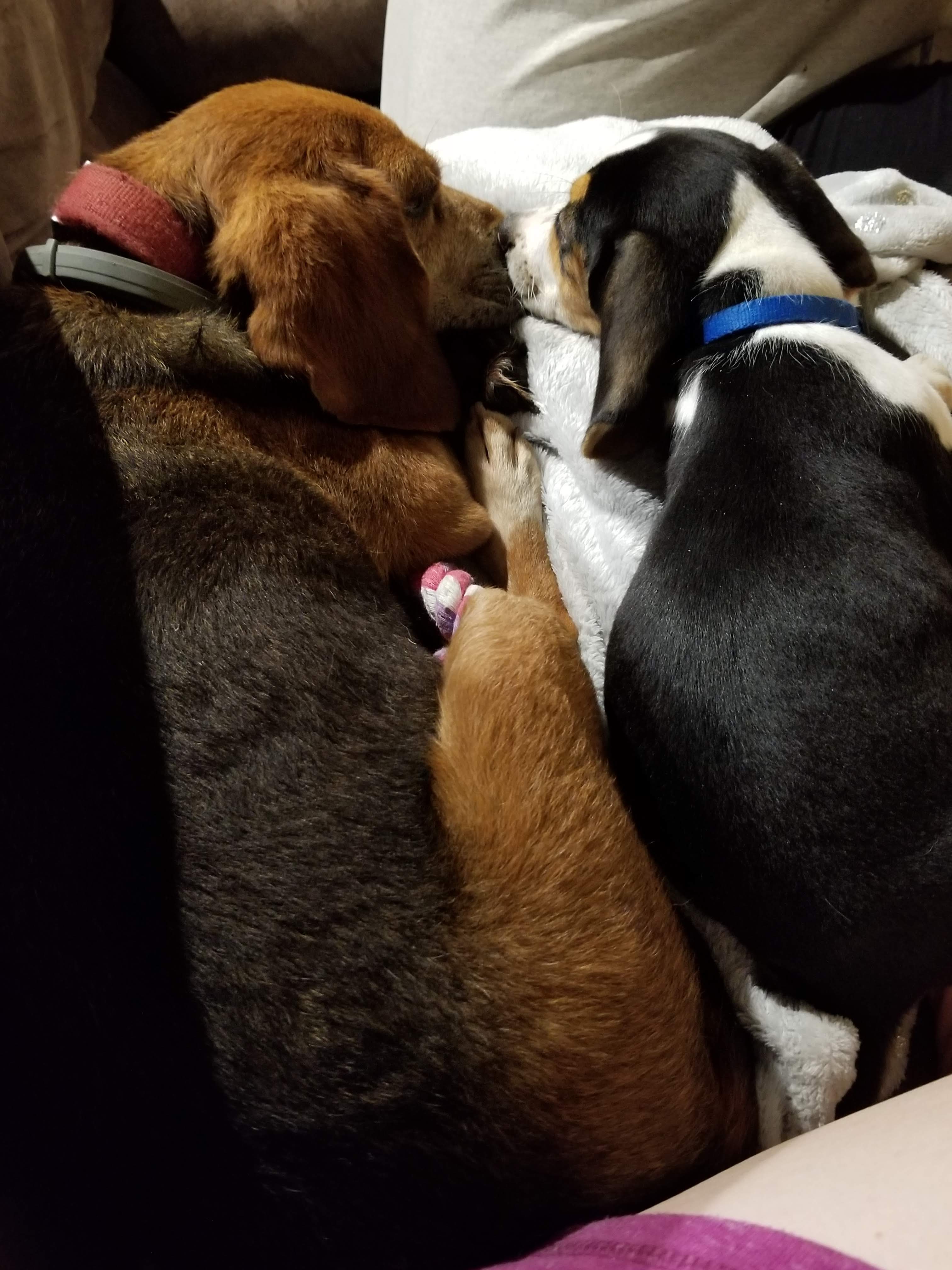
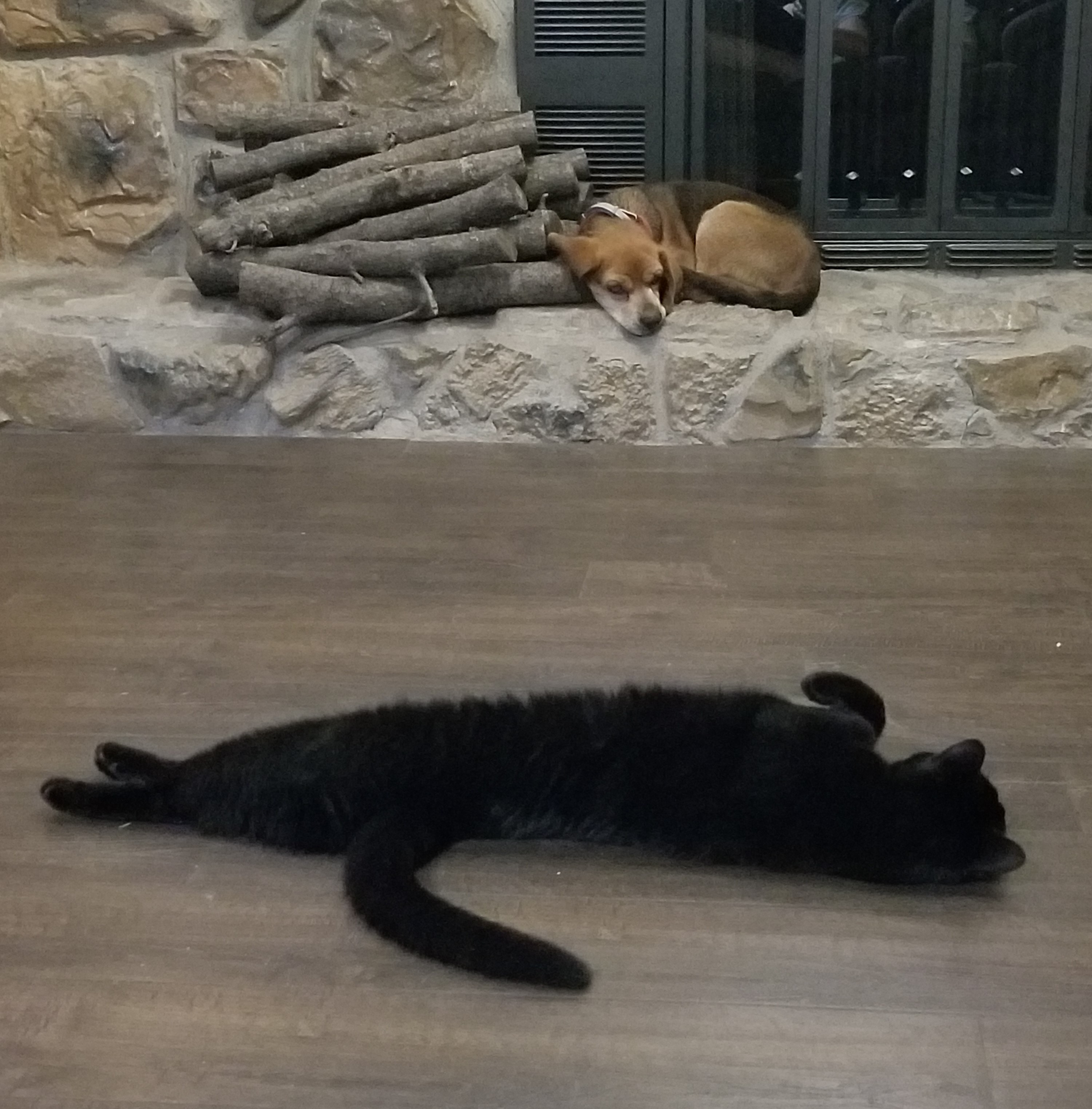
When I met Jake, I took Jude for weekend visits to Wellston, where he’d curl up on Jake’s work coveralls, finally trusting a man, too. He was the ultimate vetting tool as he grew to love Jake as much as I do. Jake, having the typically rigid view of pet rearing that comes from a cattle rancher, showed gentleness and care to Jude and all of his little abused puppy issues, from his food insecurity to his disdain for having his nails clipped. I regret not having more time with my boy when we were both younger, but more often than not, he was the focus of the time I did have. As much as I wish he’d had a better life, it comforts me to know that Jude was so central to mine, that I could literally tell the story of my adulthood trough pictures of him, alone.

There was/were the study sessions and craft marathons…

… the consoling after bad dates…

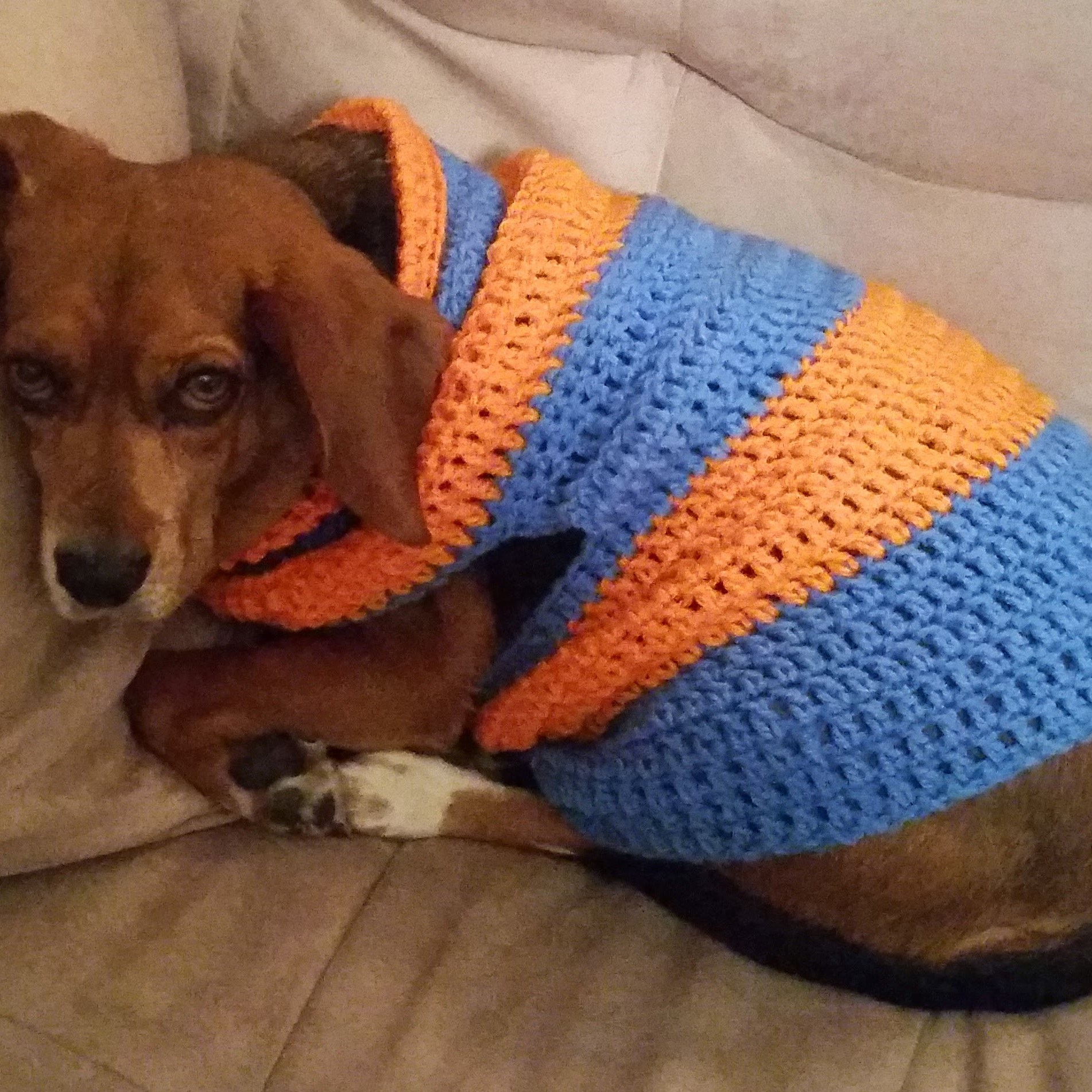
… the times we got snowed in and someone even got a fancy hand-crocheted sweater…

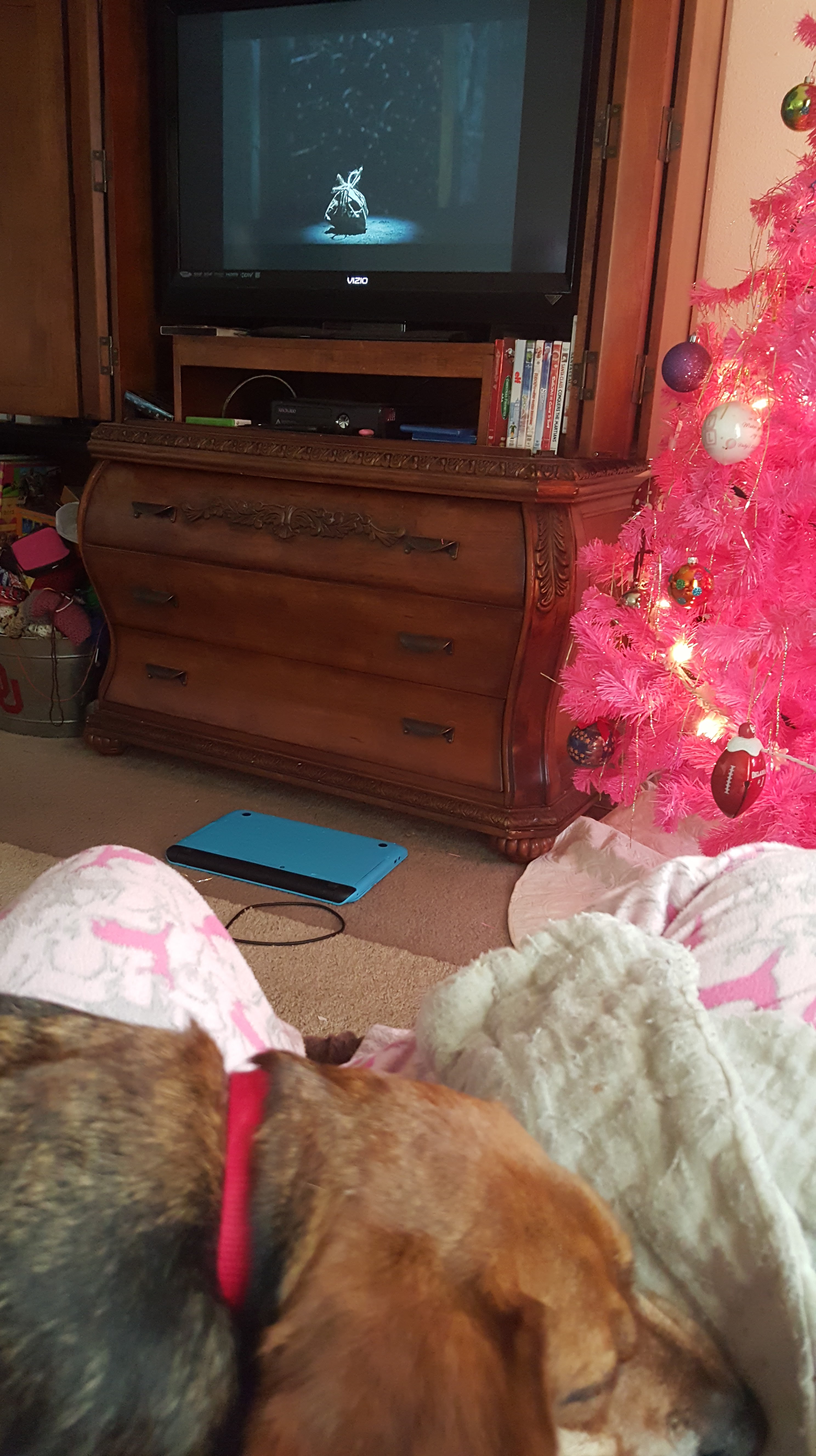
… the single girl holidays…

… the summers when I worked only twenty hours and simply didn’t know what to do with the rest of my time…

… hangout sessions at Gramma’s house…

… late night drives and exercise…

… the literal moment I got the phone call promoting me to full time librarian…

… obtaining the financial stability to buy the occasional frivolities…

… finally meeting a man worth loving…

… getting a new buddy…

… major life changes with a big move and a wedding…

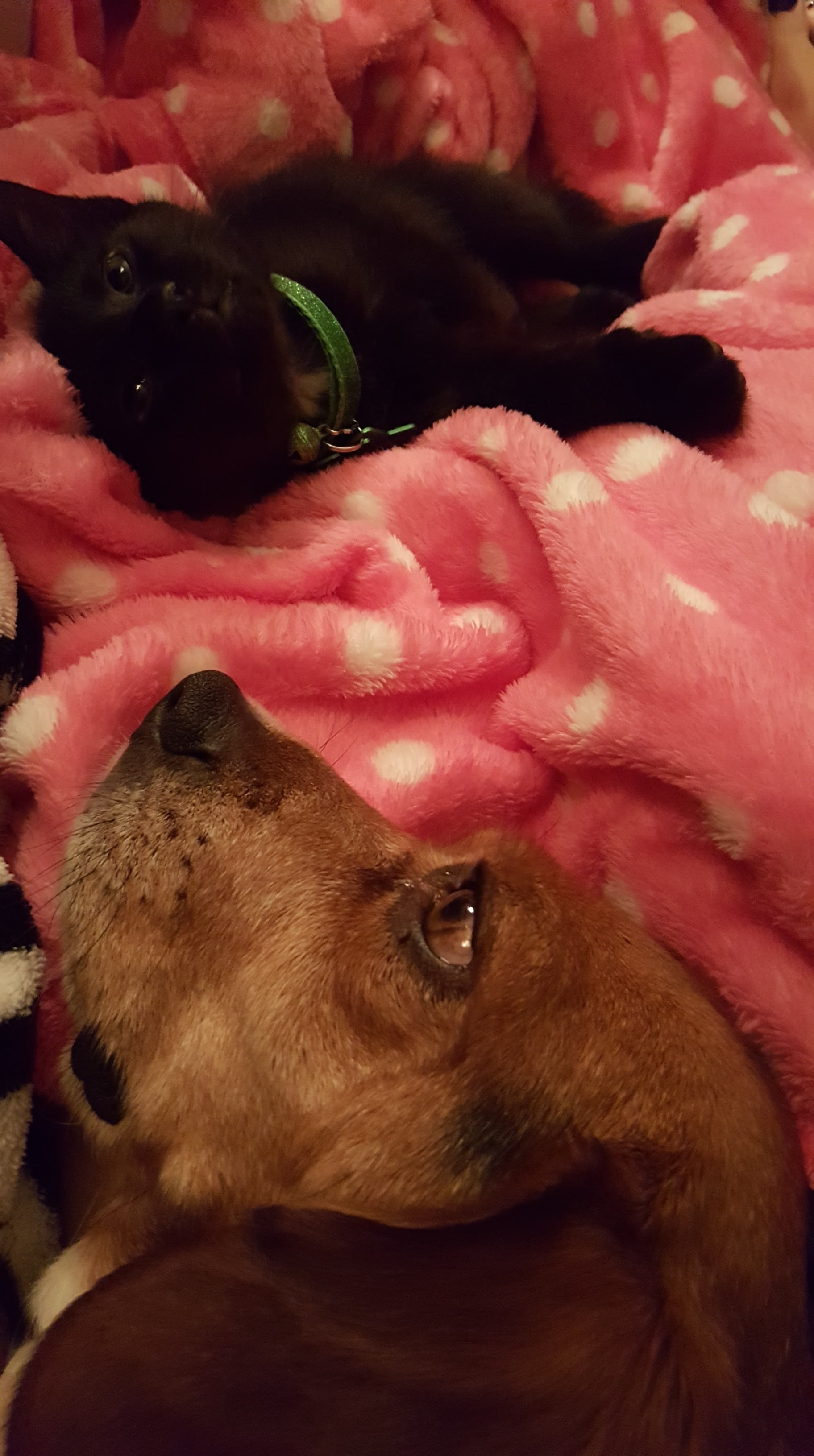
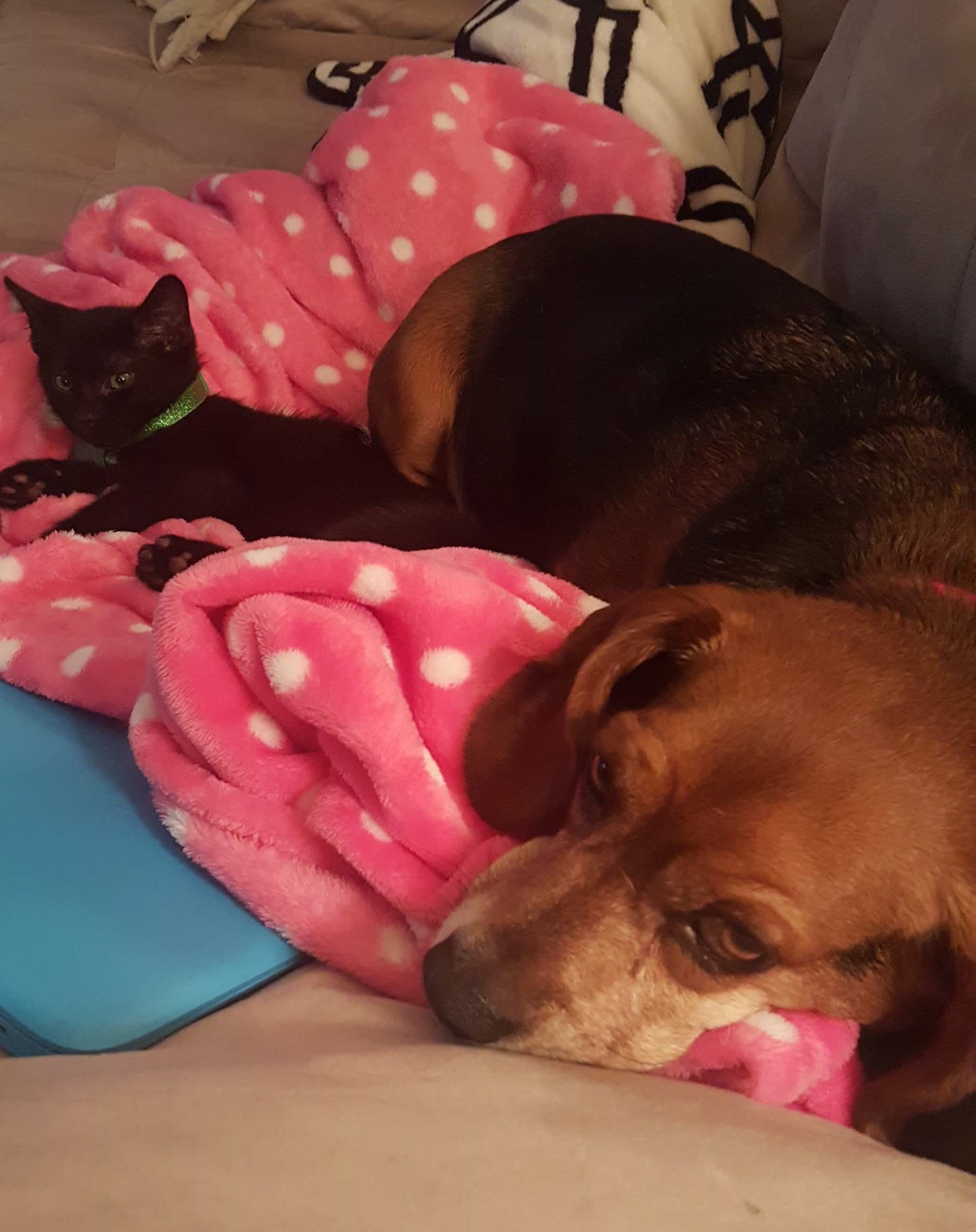
… more new buddies…

… and finally owning a home, with a great big yard.

Up until his very last day, Jude was by my side, as our lives got progressively better, supporting me through it all. He may not have been the only boy I’ll ever need anymore, but he was my best friend for so very long. After coming home one Friday night to realize that he could no longer move the back half of his body or uncurl his front foot, my rational brain took over. I’d promised us both that I’d never let him linger for the sake of my own feelings, so I called the 24 hour vet, wrapped him in a towel and silently cried as Jake drove us to the city. I fed my boy one last cheeseburger, grateful he could still eat and stayed by his side, tossing the mask so he knew it was me, petting and kissing on him, as he closed his eyes for the last time. I woke the next morning, devastated that I’d had to make the decision to say goodbye, agonizing over whether I’d called it too soon, so grateful to have a husband who would bury him while I slept, as I’d asked. I cried on and off for a week, knowing that despite my love for the others, I’d never love another animal as I did my Jude.